Quiet Is the New Watercooler: Why 2026 TV Is All Comfort, No Event
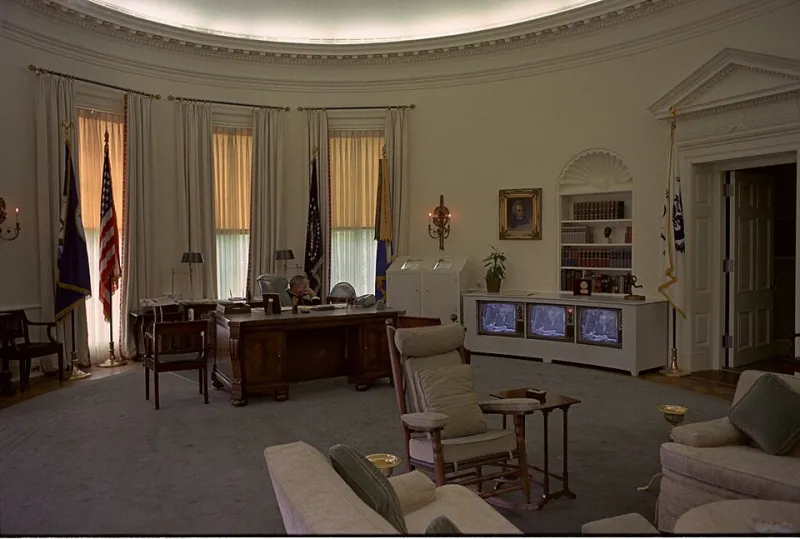
Photo: Yoichi Okamoto, Public domain, via Wikimedia Commons
In 2026, TV has gotten quiet. Not literally — plenty of shows are still loud, expensive, and full of dragons or lawyers. But the cultural volume is lower. The shows people actually finish are often the ones they have already watched. The ones they recommend are less 'you have to see this' and more 'it is fine, it is cozy, put it on.'
That is a real shift. For decades, television ran on the watercooler. A big episode aired, everyone watched at the same time, and the next morning at work you had something to talk about besides the weather. In 2026, the watercooler is scattered across group chats, streaming queues, and a thousand niche algorithms. The shared event is rarer. The comfort rewatch is everywhere.
The watercooler went quiet
The watercooler was never just about TV. It was about timing. Appointment viewing gave people a common clock. Even if you missed the episode, you knew it existed. You heard the joke on the radio, saw the magazine cover, or got spoiled by a coworker.
Streaming broke that clock on purpose. It gave us convenience, then too much convenience. Every platform wants a binge, every season drops at once, and every show is competing with everything ever made. The result is not a golden age of conversation. It is a golden age of personal queues.
By 2026, many viewers are not looking for homework. They are looking for relief. After a day of screens, notifications, and decisions, the last thing anyone wants is a new fictional universe with a wiki page and a timeline. A rerun of a familiar sitcom asks nothing. That is the appeal.
Comfort TV stopped being a guilty pleasure
For a long time, rewatching was treated like a small embarrassment — the TV equivalent of ordering the same meal at every restaurant. Not anymore. In 2026, comfort viewing is a mainstream habit, not a secret. People rewatch 'The Office,' 'Friends,' 'Gilmore Girls,' 'Schitt's Creek,' 'Bluey,' and cooking shows that feel like a warm kitchen. They fall asleep to familiar voices. They keep old seasons on in the background while folding laundry.
The pandemic years accelerated this, but they did not invent it. What changed is the status. Comfort TV is no longer a pause between serious shows. It is the main course for a lot of households. Low stakes is the feature, not the flaw.
The algorithm learned to love a rerun
Streaming services are not charities. They push what keeps people watching, and familiar shows are safe bets. A new prestige drama might win awards and lose viewers by episode three. A beloved sitcom can run for months in the background. It costs less to license than a new hit costs to make, and it keeps the app open.
That logic shapes what gets made. Producers pitch 'rewatchable' shows. Writers get notes about warmth, standalone episodes, and low commitment. Reality formats and procedurals thrive because you can drop in anytime. The next hit may be designed to be half-watched, which is a strange goal for art but a sensible one for retention.
The cost of cozy
There is a trade-off. When everyone is watching their own familiar thing, fewer shows become shared events. The monoculture shrinks. A great new series can still break through, but it has to fight through more noise than ever. The watercooler moment becomes a niche Discord moment.
And comfort can become a rut. If viewers only press play on what they already know, new voices struggle. The cozy corner is comfortable, but it can also get small. The upside is that people are choosing what feels good instead of what feels mandatory. That is not a crisis. It is a preference.
What gets made now
In 2026, the industry is chasing the feeling of a favorite hoodie. That means more low-stakes comedies, more gentle reality, more procedural comfort food, and more shows built to be rewatched rather than dissected. It also means fewer giant swings that require everyone to show up on the same night.
The watercooler is not coming back in its old form. The sofa is the new town square. People still want to talk about TV, but they want to talk about the show that helped them unwind, not the show that gave them a second job. Quiet TV is not a phase. It is how a lot of Americans have decided to relax.