Lights Up, Show's Over: Inside the 45-Minute Arena Set That's Selling Out Anyway
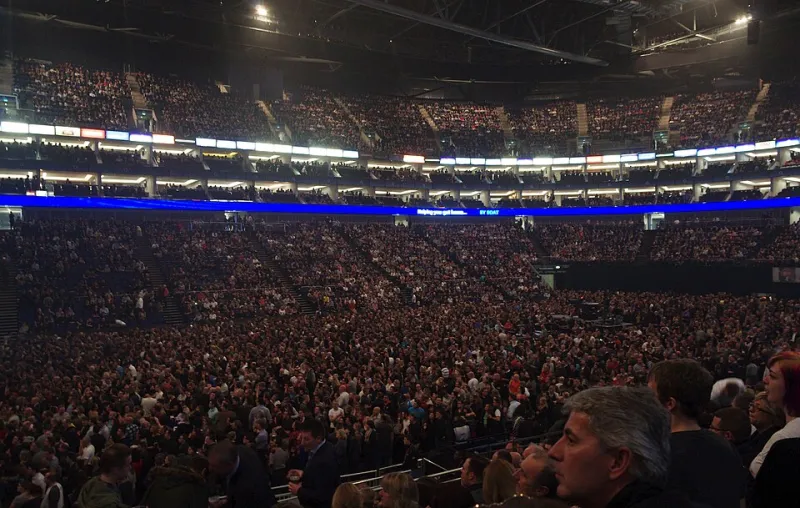
Photo: mattbuck (category), CC BY-SA 4.0, via Wikimedia Commons
Something strange happened at a packed arena show this fall. The house lights came up at 9:52 p.m. No encore. No fake walk-off, no drummer tossing sticks into the dark while the crowd chants for three more minutes. The headliner played forty-five minutes, said thank you, and was probably in a car before the parking garage cleared out.
And nobody booed.
That's the part worth paying attention to. Across genres — pop, indie, country, even a few hip-hop tours — the headline set is shrinking. Encores are being quietly retired. Two-hour marathons are being replaced by tight, disciplined, roughly hour-long runs that start on time and end before the babysitter's meter expires. Tickets still move. Arenas still fill. The short show isn't a cost-cutting embarrassment anymore. It's the flex.
The Math Behind the Mic Drop
Start with the boring explanation, because it's doing a lot of work. A long tour is expensive in ways that don't show up on a setlist. Crew overtime, venue curfews, truck loading windows, the cost of moving a hundred people between cities. Trim forty minutes off a headliner's set and you tighten the whole night — earlier load-out, cheaper labor, fewer union penalties for running past midnight.
But the economics go the other way too, and this is where it gets interesting. Artists who play shorter are playing more dates. A 45-minute set is easier on a voice, easier on knees, easier on the kind of exhaustion that turns a summer tour into a medical event. Fewer songs per night, more nights per year, and a ticket price that hasn't gone down at all. A short set is not a discount. Fans are paying full freight and getting less show, and the artists know it.
Which means the brevity has to be sold as a feature, not a shortcut.
Nobody Has Time for the Slow Part
The cultural argument is simpler: attention spans on the audience side are shot, and performers know it. We've spent the last few years watching concerts through six-second vertical clips. The song that matters is the one with the hook you can hear from the concourse. A two-hour set with a mid-show acoustic interlude and a drum solo is a lot of dead air for a room full of people who came up on the highlight reel.
So the modern set is built like a playlist on shuffle — no filler, no deep cuts nobody filmed, no long spoken-word moment about the city they're in tonight. Just the hits, back to back, in a shape that survives being chopped into clips.
There's a name for what happens next, and it's the reason this trend has legs.
The Clip Is the Product Now
A 45-minute set produces a very specific artifact: a clean, dense, extremely shareable night. The artist leaves the stage while the audience is still buzzing, which means the walk to the car is spent posting. By the time the merch line clears, the show already exists on the internet as a nine-post story and a couple of breathless videos from the third row.
Compare that to the old encore ritual. You stand there clapping in the dark for four minutes, the band comes back, plays two songs you could have predicted with your eyes closed, and half the room is already eyeing the exit. The encore was always a negotiation dressed up as generosity. In 2026, artists are just skipping the negotiation.
One touring manager put it plainly to me last month: the encore used to be the part people remembered. Now the encore is the part people leave during.
The Fan Psychology Is Weirder Than You Think
Here's the counterintuitive bit. Shorter sets seem to be making fans more devoted, not less. Ask around and you'll hear a version of the same sentence: it felt respectful. Like the artist trusted you to have a life. Like the show was a gift with a bow on it instead of a hostage situation with a parking fee.
There's also scarcity working in the background. A tight set leaves you wanting. Wanting is good for business — good for the next tour announcement, good for the vinyl preorder, good for the fan account that posts the same forty-five minutes from six different cities. Abundance makes a memory. Scarcity makes a mythology.
And honestly? A 45-minute set is a much better first concert. Parents are bringing kids again. People with early shifts are buying tickets again. The barrier to entry dropped without the ticket price dropping, which is the most 2026 sentence anyone has written.
Where This Goes
The risk is obvious. If every artist trims to three-quarters of an hour, the short set stops being a statement and starts being the standard — and then audiences will want something else to feel special about. There's already grumbling in comment sections from fans who paid arena prices for what felt like a festival slot.
But for now, the early exit is working. Artists are healthier, tours are longer, feeds are fuller, and the house lights are coming up while everyone's still grinning. That's a trade most people seem willing to make.
Just check the setlist before you buy. Forty-five minutes goes fast when you're the one in the parking garage.